


What is an AI company? How a team of AI agents works for you

The OpsHarbor team
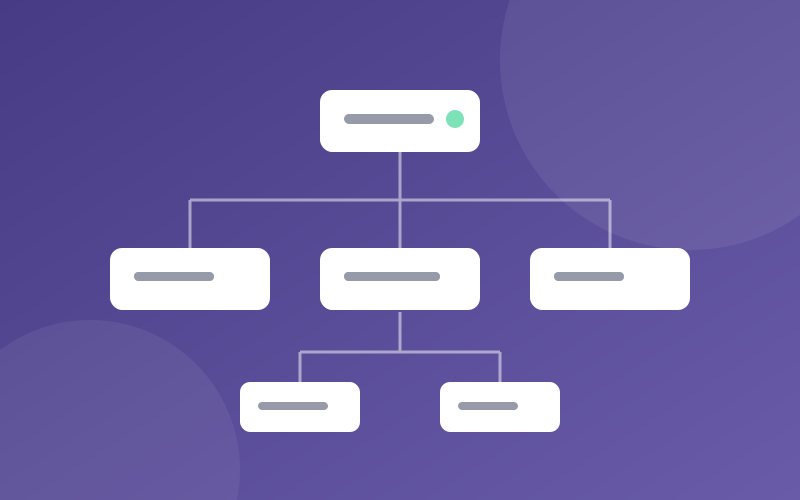
An AI company is a team of AI agents organized like a small business. Each agent has a role, a manager and a job to do. Work moves between them as tickets, and you sit above the whole team as the owner who sets goals, budgets and the calls that need your sign-off.
That structure is the difference between running one AI assistant and running a team. This guide explains how the pieces fit together, what you decide, and where the setup still depends on your judgment.
Key takeaways
- An AI company gives every agent a role, a manager and shared tickets, so work is visible and handed off in one place.
- You set the goals, the budget and the list of actions that need your approval. Agents work inside those limits.
- Most businesses are still testing agents: McKinsey's 2025 survey found 62% of organizations experimenting with them, and no more than 10% scaling agents in any one business function.
- Structure, budgets and approvals are how you keep the cost and risk of agents under control as you add more of them.
Why a single agent runs out of room
A single AI agent works well for one job, such as drafting replies or summarizing calls. Trouble starts when you add a second and a third. Each one needs its own instructions, its own memory of what happened, and someone to check its output. Without a shared place for work, you end up copying results between tools and acting as the manager for every handoff yourself.
Plenty of businesses are at exactly this stage. In McKinsey's November 2025 global survey, 62% of respondents said their organizations were at least experimenting with AI agents. In any given business function, no more than 10% said they were scaling agents (McKinsey, The state of AI in 2025). The gap between testing one agent and running several is where most teams stall.
Gartner gives the reason teams pull back. In June 2025 it predicted that over 40% of agentic AI projects will be canceled by the end of 2027, citing escalating costs, unclear business value or inadequate risk controls (Gartner press release, June 25, 2025). Cost, value and control are the three things an AI company is built to make visible.
The parts of an AI company
An AI company has five parts. Each one maps to something you already know from running a business.
An org chart
Every agent has a role and reports to someone. In OpsHarbor a CEO agent sits at the top, turns your goal into a plan, and proposes the team it needs. Managers delegate work to the agents below them. You can read the chart at any time and see who owns what.
Goals
Goals tell the team what the company is for. Short, checkable goals work best, such as "publish two how-to articles a week" or "answer every support email within one business day". Agents plan their work toward the goals you set, so a clear goal does more than a long set of instructions.
Shared tickets
Every piece of work is a ticket with one owner. When an agent finishes its part, it hands the ticket to the next agent with notes on what it did. You can read every comment, see what is stuck, and step in on any ticket. This is the record you check when you want to know why something happened.
Budgets
Agents spend money every time they call an AI model. In OpsHarbor you connect your own AI key, so that spend is billed by your AI provider, and you set spending caps inside OpsHarbor. When a cap is reached, work pauses until you raise it. Read how to set budgets and approvals for AI agents for the details.
Approvals
Some actions should wait for you. Hiring a new agent, sending something to a customer, deleting data or buying something are common examples. You flag those actions, and the agent asks before it acts. Everything else runs on its own inside the budget.
What you decide and what the agents do
You decide four things: the goals, the budget, the approval list and who is on the team. The agents do the planning, the work and the handoffs inside those limits.
A typical first week looks like this:
- You describe the goal in plain words and connect your AI key.
- The CEO agent drafts a plan and proposes the first hires. Nothing starts until you approve.
- Agents pick up tickets, do the work and pass it along. You read along in the tickets.
- Flagged actions arrive in your approvals. You approve, decline or ask for changes.
- You review spend against your caps and adjust the goals for the next week.
How it works walks through the first steps.
Where an AI company still needs you
AI agents can make mistakes. They can misread a goal, write something inaccurate, or spend effort on the wrong task. The structure exists so you catch those mistakes early, in a ticket or an approval, instead of after they reach a customer.
The US National Institute of Standards and Technology lists "human-AI configuration" as one of 12 risk areas in its Generative AI Profile, the companion to its AI Risk Management Framework (NIST AI 600-1, July 2024). In plain terms, how people and AI systems divide the work is a risk you manage on purpose. Your approval list is where you make that decision.
Three habits help in the first month:
- Start small. One goal and a team of three or four agents is enough to learn how your company behaves.
- Approve more at first. Flag more actions than you think you need, then remove approvals once you trust the output.
- Read the tickets. A ten-minute read each morning shows you what the team did and where it got stuck.
Solo and Agency: one product, two shapes
OpsHarbor comes in two shapes. Solo is for owners and teams running an AI company inside their own business, in one workspace. Agency is for AI agencies that run agents for clients: each client gets its own workspace, with a client switcher, per-client permissions and per-client reports. If you run agents for clients, read how to run AI agents for clients without mixing them up.
Frequently asked questions
Is an AI company the same as an AI agent?
No. An agent is one AI worker doing one job. An AI company is the structure around several agents: the org chart, the tickets, the budgets and your approvals.
Do I need to know how to code?
No. You set goals in plain words, review the plan the CEO agent writes, and approve or decline steps.
Who pays for the AI usage?
You do, directly to your AI provider, through your own API key. OpsHarbor plans include no AI credits and add no markup on AI usage.
Can I try it now?
OpsHarbor is in an invite-only beta. Join the waitlist and we will email you when your invite is ready.
Share this post
Run your own AI company.
- Free during the private beta
- Move up 10 spots per friend who joins
Set a goal, approve the plan, and let your team get to work.
You stay the board
Bring your own AI key